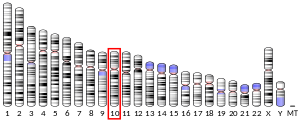
V-domain Ig suppressor of T cell activation (VISTA) is a type I transmembrane protein that functions as an immune checkpoint and is encoded by the C10orf54 gene.[5][6][7]




Structure and function
VISTA is approximately 50kDa and belongs to the immunoglobulin superfamily and has one IgV domain.[8][5]
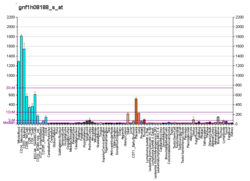
VISTA is part of the B7 family, is primarily expressed in white blood cells and its transcription is partially controlled by p53.[8][9] There is evidence that VISTA can act as both a ligand[10] and a receptor[11] on T cells to inhibit T cell effector function and maintain peripheral tolerance.[5][8]
Clinical significance
VISTA is produced at high levels in tumor-infiltrating lymphocytes, such as myeloid-derived suppressor cells and regulatory T cells, and its blockade with an antibody results in delayed tumor growth in mouse models of melanoma[12] and squamous cell carcinoma.[13]
Monocytes from HIV-infected patients produce higher levels of VISTA compared to uninfected individuals. The increased VISTA levels correlated with an increase in immune activation and a decrease in CD4-positive T cells.[14]
As a drug target
There is an ongoing cancer immunotherapy clinical trial for a monoclonal antibody targeting VISTA in advanced cancer.[15] Preliminary results of the phase I clinical trial show good safety tolerance and anti-cancer activity in patients with advanced tumours.[16] Another ongoing clinical trial involves a small molecule that antagonizes the programmed death-ligands 1 and 2 (PD-L1 and PD-L2), and VISTA pathways in patients with advanced solid tumors or lymphomas.[17]
| This article uses material from the Wikipedia article Metasyntactic variable, which is released under the Creative Commons Attribution-ShareAlike 3.0 Unported License. |